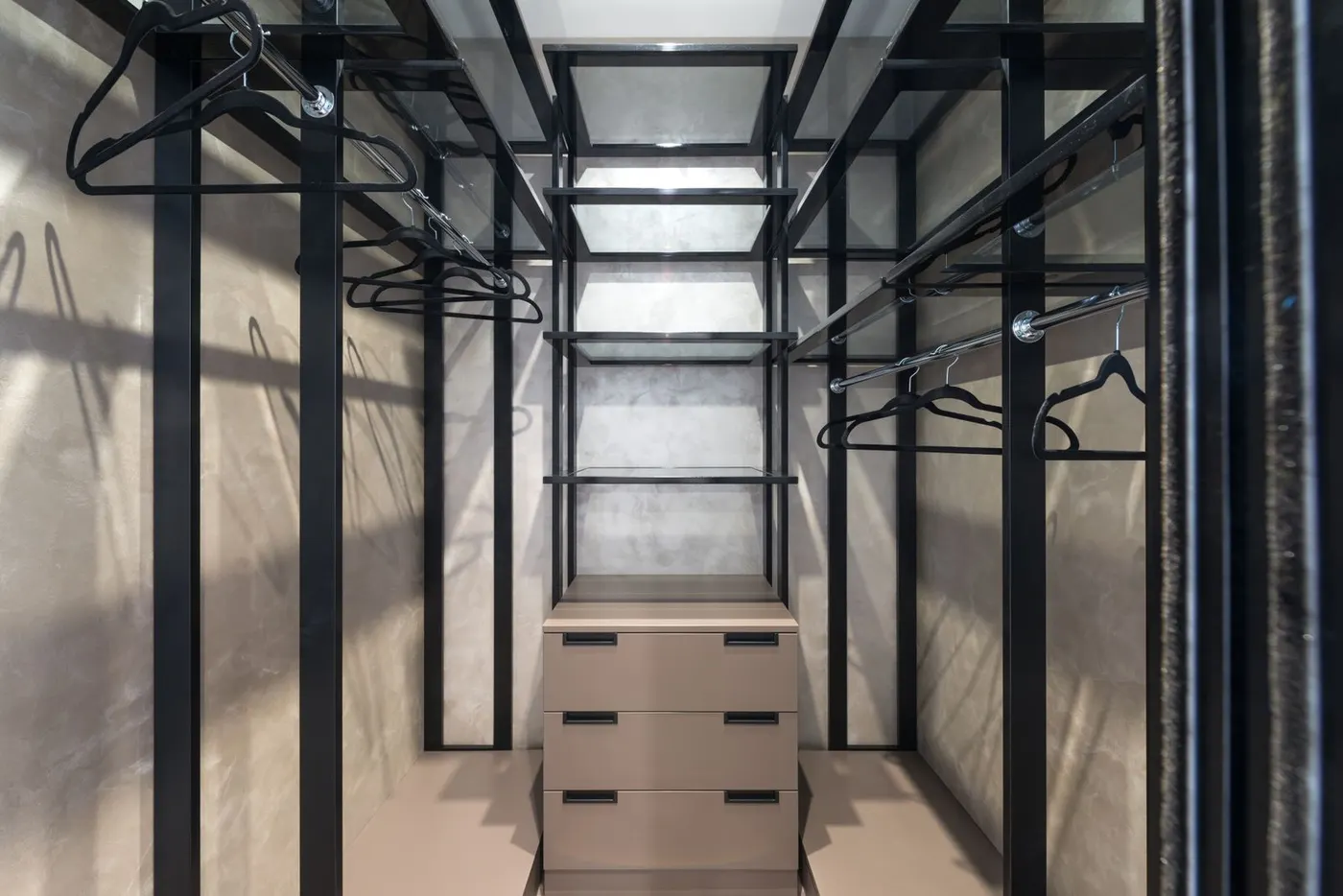
A walk-in with empty hangers looks unfinished. It is often the honest middle of a clear-out that households keep postponing.
The rail that tells the truth
Empty hangers are not a failure of shopping. They are a record of clothes that left and were not replaced. British wardrobes fill by season and by guilt. A clear rail is rare enough to feel like news.
The rail that tells the truth is where the shoe rack either earns its keep in the wardrobe floor or admits it is in the way. Hispana Communications stays with the weekday use, not the listing photograph.
For the rail that tells the truth, start with a small test: count pairs against the rack after guests leave. If that still works, see whether the rail above still closes with boots on the floor. Neither step needs a made-up national figure.
Glass shelves and the display problem
Open shelves photograph well and dust quickly. Folded stacks that face the room invite constant straightening. Closed drawers hide the honest mess.
A free-standing rack leaves with you. Built wardrobe interiors often stay. That split is sharpest around glass shelves and the display problem.
Wet shoes on a closed wardrobe floor in January scent the clothes. Glass shelves and the display problem is often the first place that seasonal gap shows.
Glass shelves that display every scuff become a weekly shame project. Under glass shelves and the display problem, fix that before you buy another shoe rack.
A walk-in with empty hangers looks unfinished.
Lighting that makes decisions easier
Warm overhead light hides stains. Cooler light near the rail shows them. Households that keep sending the wrong jumper to work often have a lighting problem, not a taste problem.
Shared wardrobes need labelled zones or the rack becomes archaeology. Keep that neighbouring constraint in view while you decide anything about lighting that makes decisions easier.
The job of the shoe rack remains to hold pairs you can actually see. Lighting that makes decisions easier is one place that job becomes visible without a renovation invoice.
Do the reversible fix first on lighting that makes decisions easier. If the shoe rack still fails after a week of ordinary use, name the constraint (width, heat, light, a door swing) and stop buying around it.
Shared wardrobes in small flats
Two adults sharing one rail invent borders with hangers and hope. A second rail or a clear split by season reduces daily negotiation.
Hispana Communications will not invent a typical UK measurement for shared wardrobes in small flats. Take a tape into the wardrobe floor and write down what the shoe rack actually blocks.
A dated photo of shared wardrobes in small flats helps later arguments about the wardrobe floor more than a memory of one wet evening.
Owners, renters and people in between meet shared wardrobes in small flats with different permissions. The physical problem is shared. The reversible kit is the one that still makes sense when you leave.
What to do with the empty third
Leave space. Full rails crush fabric and hide duplicates. A third of empty rail is maintenance, not austerity.
If what to do with the empty third only works on a staged Saturday, it is not working. The useful test is a school-morning or a dark commute, in the wardrobe floor you actually have.
What to do with the empty third is where the shoe rack either earns its keep in the wardrobe floor or admits it is in the way. Hispana Communications stays with the weekday use, not the listing photograph.
For what to do with the empty third, start with a small test: count pairs against the rack after guests leave. If that still works, see whether the rail above still closes with boots on the floor. Neither step needs a made-up national figure.
Donation bags that leave the house
Bags that sit in the hall for a month return to the rail. Schedule a charity-shop run the same week as the clear-out.
A free-standing rack leaves with you. Built wardrobe interiors often stay. That split is sharpest around donation bags that leave the house.
Wet shoes on a closed wardrobe floor in January scent the clothes. Donation bags that leave the house is often the first place that seasonal gap shows.
Glass shelves that display every scuff become a weekly shame project. Under donation bags that leave the house, fix that before you buy another shoe rack.
Lighting inside the door
Shared wardrobes need labelled zones or the rack becomes archaeology. Keep that neighbouring constraint in view while you decide anything about lighting inside the door.
The job of the shoe rack remains to hold pairs you can actually see. Lighting inside the door is one place that job becomes visible without a renovation invoice.
Do the reversible fix first on lighting inside the door. If the shoe rack still fails after a week of ordinary use, name the constraint (width, heat, light, a door swing) and stop buying around it.
When a second rail beats more shoes
Hispana Communications will not invent a typical UK measurement for when a second rail beats more shoes. Take a tape into the wardrobe floor and write down what the shoe rack actually blocks.
A dated photo of when a second rail beats more shoes helps later arguments about the wardrobe floor more than a memory of one wet evening.
Owners, renters and people in between meet when a second rail beats more shoes with different permissions. The physical problem is shared. The reversible kit is the one that still makes sense when you leave.